
Structure Prediction & Target Enablement
Unlock your protein target for high-precision, structure-based design
We are in the midst of a revolution in structural biology, with a proliferation of available structures across protein classes now possible due to advances in cryo-EM and technologies such as AlphaFold. However, significant refinement and accurate ligand placement is required to use these models in physics-based simulations including docking and free energy perturbation.
Schrödinger’s comprehensive suite of solutions for protein model refinement, ligand placement, and binding site analysis allows you to unlock a broader range of targets for structure-based design.
CAPABILITIES
Solutions to generate design-ready structures from a broad range of starting points
Enable both on-targets and off-targets for rigorous structure-based design
High resolution structures
Prepare high resolution X-ray crystal or cryo-EM structures for structure-based design

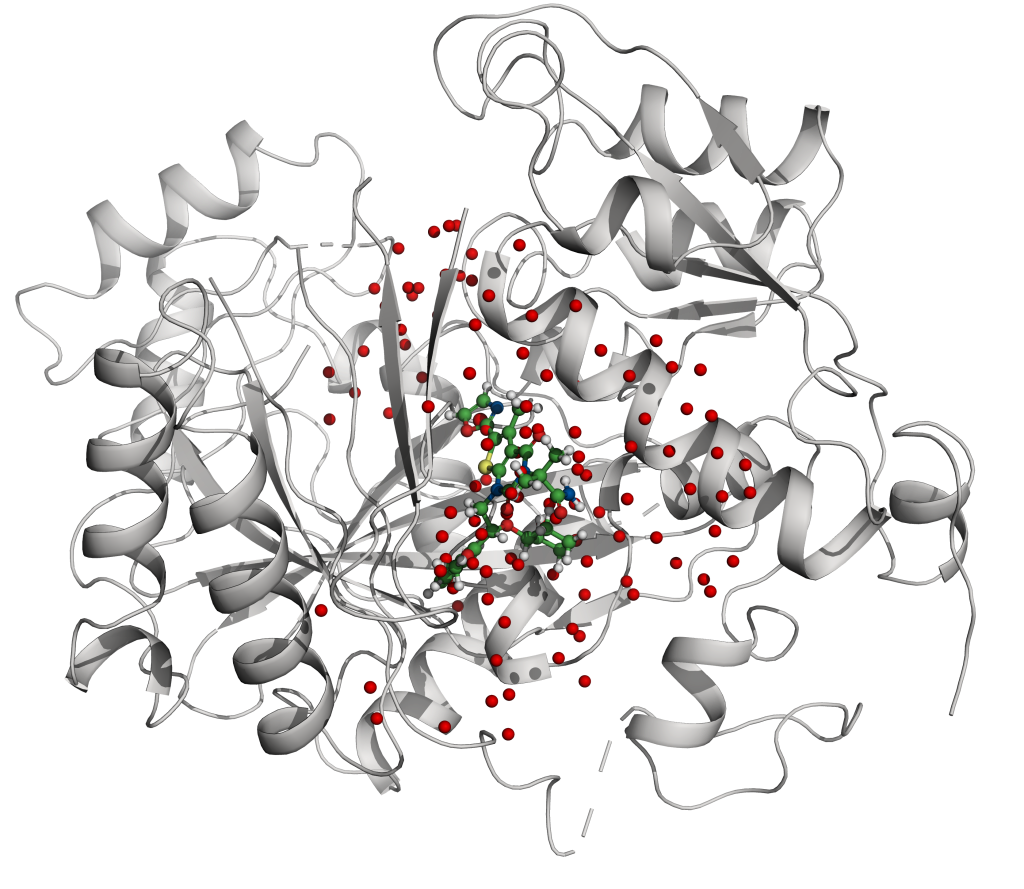
Quickly and reliably prepare high-quality, all-atom protein models suitable for physics-based simulations
Predict the binding mode of novel ligands in existing structures at near experimental accuracy
Understand competitor binding modes without needing to obtain an experimental structure for each series
Low resolution structures
Refine and validate low resolution X-ray crystal or cryo-EM structures
Correct common structural problems and create reliable, all-atom protein models
Dock ligands into ambiguous density, such as in cryo-EM structures, using a best-in-class force field to resolve uncertainty
Place cofactors and solvent to convert low resolution models into complete, all-atom representations
No structure
Create and validate structures from homologous protein sequence or make use of available AlphaFold structures
Harness the power of genomic data to easily create homology models of pharmaceutically relevant targets
Reliably and accurately dock ligands into template-based homology models or AlphaFold structures
Quantitatively validate structural models using known SAR and a highly accurate in silico binding affinity assay

Identify and assess the druggability of protein binding sites
Binding site identification
Rapidly identify and rank a protein’s probable binding sites with confidence
Cryptic pocket exploration
Elucidate cryptic binding pockets and reveal binding hot spots using metadynamics accelerated sampling workflow for mixed solvent simulations
Hydration site analysis
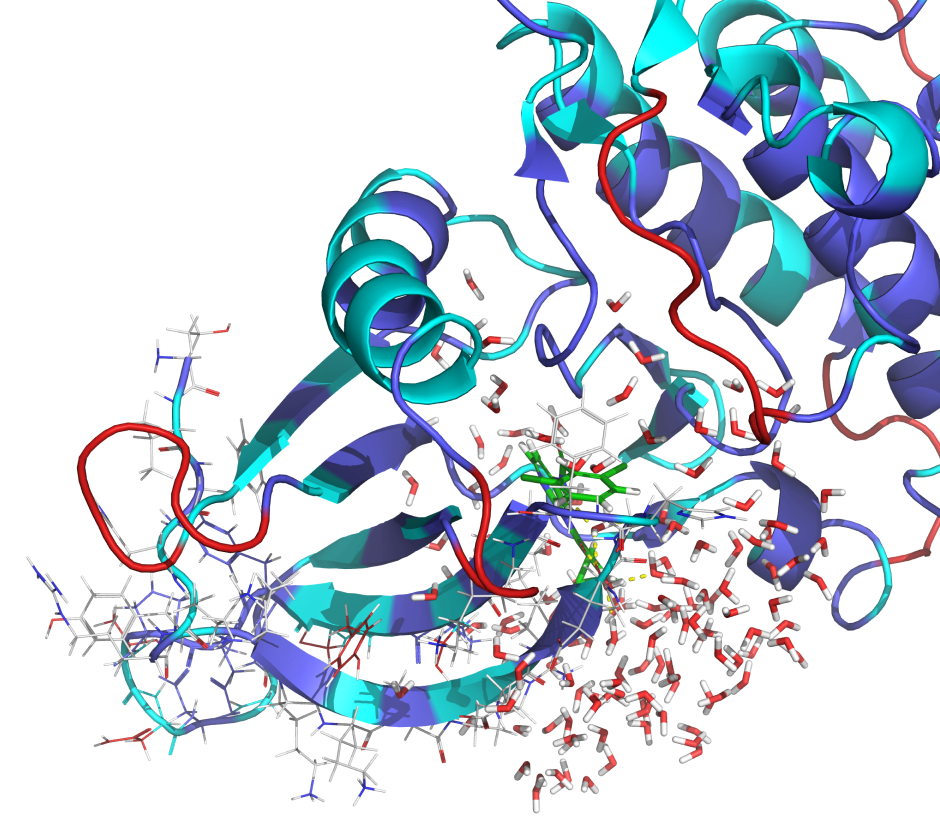
Discover new possibilities for ligand design by predicting the location and thermodynamic potential of hydration sites in the binding site
Case studies & webinars
Discover how Schrödinger technology is being used to solve real-world research challenges.

Structure-based drug discovery without a structure: Enabling accurate FEP+ predictions for challenging targets and ADMET anti-targets
Opening new worlds for structure-based drug discovery with advanced computational methods
Improving protein-ligand modeling into cryo-EM data and the use of those models in drug discovery efforts
Documentation & Tutorials
Get answers to common questions and learn best practices for using Schrödinger’s software.
Key Products
Learn more about the key computational technologies available to progress your research projects.
IFD-MD
Accurate ligand binding mode prediction for novel chemical matter, for on-targets and off-targets
OPLS4 & OPLS5 Force Field
A modern, comprehensive force field for accurate molecular simulations
WaterMap
State-of-the-art, structure-based method for assessing the energetics of water solvating ligand binding sites for ligand optimization
Desmond
High-performance molecular dynamics (MD) engine providing high scalability, throughput, and scientific accuracy
Publications
Browse the list of peer-reviewed publications using Schrödinger technology in related application areas.
Using AlphaFold and Experimental Structures for the Prediction of the Structure and Binding Affinities of GPCR Complexes via Induced Fit Docking and Free Energy Perturbation
Coskun, D. et al. J. Chem. Theory Comput. 2024, 20(1), 477–489
Benchmarking Refined and Unrefined AlphaFold2 Structures for Hit Discovery
Zhang, Y. et al. J. Chem. Inf. Model. 2023, 63(6), 1656–1667
Induced-Fit Docking Enables Accurate Free Energy Perturbation Calculations in Homology Models
Xu, T. et al. J. Chem. Theory Comput. 2022, 18(9), 5710–5724
Software and services to meet your organizational needs
Software Platform
Deploy digital drug discovery workflows using a comprehensive and user-friendly platform for molecular modeling, design, and collaboration.
Research Services
Leverage Schrödinger’s computational expertise and technology at scale to advance your projects through key stages in the drug discovery process.
Support & Training
Access expert support, educational materials, and training resources designed for both novice and experienced users.